The Correlation Conundrum and What to Do About It: With the rise in correlations, diversification is more important than ever
Over the past two decades, the amount of equity assets invested passively has increased from roughly 10% in 1993 to about 30% today. At the same time, correlations between individual stocks have generally risen. Let’s take the S&P 500 as an example: Based on the average daily correlation over the trailing six months, correlations have risen from roughly 10% in 1994 to 66% at the end of 2011
Showing posts with label strategy. Show all posts
Showing posts with label strategy. Show all posts
Monday, May 14, 2012

Wednesday, April 11, 2012
The Hour Glass Economy
While global diversification is important, America remains the largest economy on the planet. So, how do you successfully invest in the USA?
This article offers some insights into America's "hour glass economy".
http://www.algemeiner.com/2012/04/09/corporations-plan-for-post-middle-class-america/
This article offers some insights into America's "hour glass economy".
http://www.algemeiner.com/2012/04/09/corporations-plan-for-post-middle-class-america/
Wednesday, January 5, 2011
Global investing trap: Economic growth as red herring

First of a three-part series on misconceptions about international investing.
It seems a simple proposition: If you had a choice between investing in a country with an economy that promises rapid growth, or investing in one with flat or stagnant growth—such as the two economies depicted in the chart showing gross domestic product (GDP) growth —which would you choose?
Thursday, August 26, 2010
Is "Buy and Hold" really the way to go?
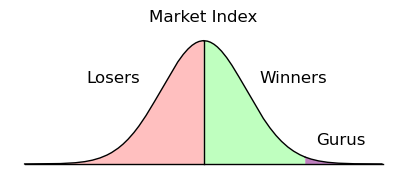
...But if there are no legitimate public winning strategies, if instead it's a fair market and everyone has the same opportunity for success, how can some people become multimillionaires while others lose their money? That can't be because of chance, can it?
Well, as a matter of fact, yes, investment success can and does result from pure chance, and stories of investment success are much more likely to result from chance than genius.
Because everyone is trying to outwit everyone else in unpredictable ways, the stock market is much more a random process than a moral drama with predictable winners and losers. But even though the market doesn't (and cannot) reward investment ingenuity, it does pay attention to chance factors.
Read the full article here:
http://arachnoid.com/randomness/index.html#Investment_Genius
Subscribe to:
Posts (Atom)